
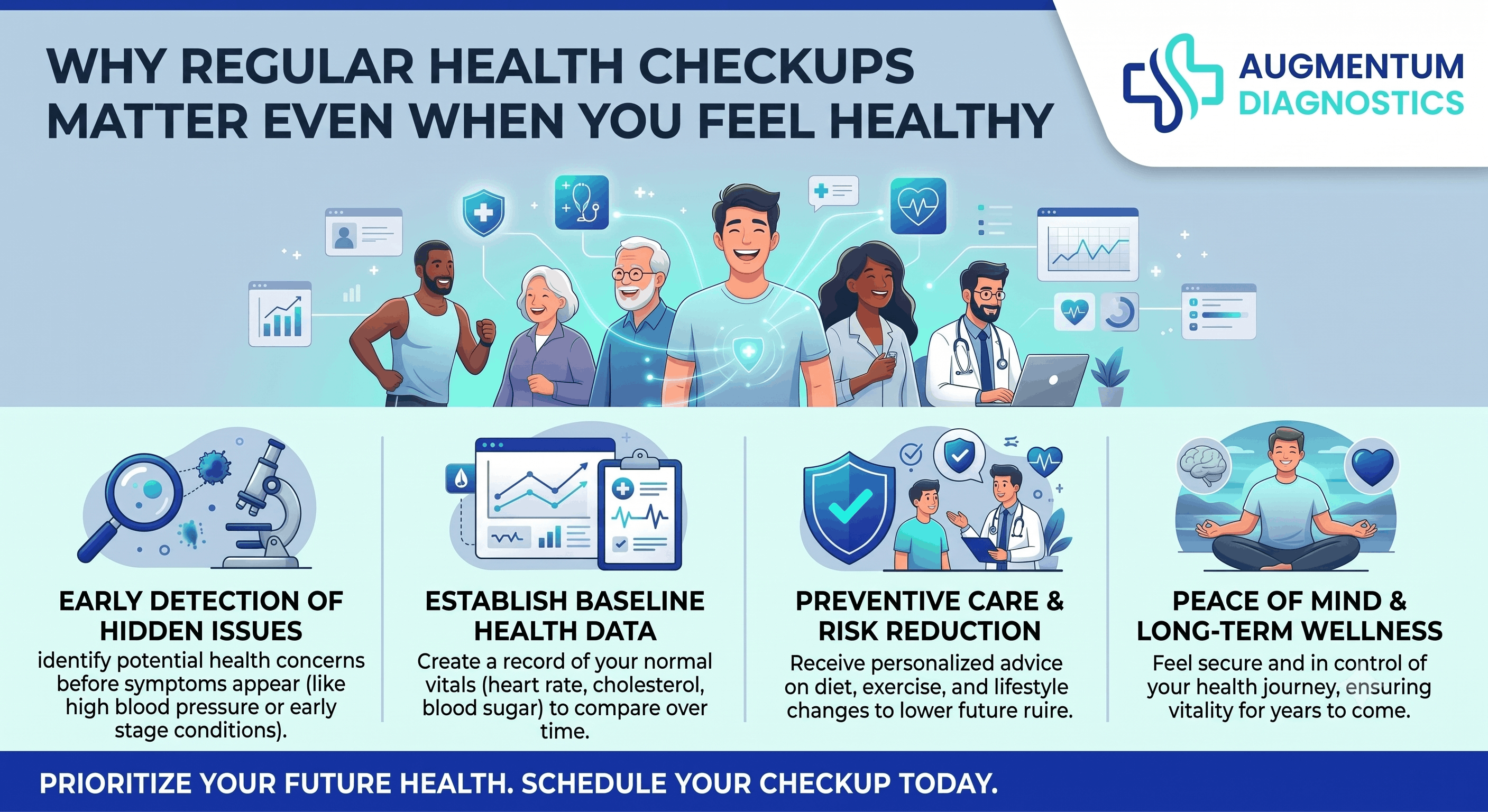
Feeling well tells you how you feel today, not whether your blood pressure, blood sugar, cholesterol, kidney function, or cancer risk has changed. By matching checks to your age and risk profile, you can avoid both false reassurance and unnecessary testing, then know what to do with an abnormal result.
Key takeaways
- Feeling well does not exclude hypertension, diabetes, high cholesterol, or kidney disease.
- Build checkups around your age, family history, symptoms, and existing risk factors.
- Choose tests that answer a health question instead of ordering the largest panel.
- Follow preparation instructions and discuss abnormal results with a qualified clinician.
Feeling healthy does not rule out a health problem
Feeling well does not prove that your body is working normally. Silent health problems such as hypertension, type 2 diabetes, high cholesterol, kidney disease, anaemia, and liver disease can develop without noticeable warning signs.
High blood pressure without symptoms can still raise your risk of stroke, heart disease, and kidney damage. Blood-pressure screening from age 18 can identify that risk before a symptom-based visit would; an initially high clinic reading needs confirmation outside the clinic before treatment.
Screening also finds measurable risk rather than waiting for illness to announce itself. Type 2 diabetes screening applies to adults aged 35 to 70 who have overweight or obesity, even without symptoms. High cholesterol screening helps reveal cardiovascular risk that you cannot feel.
A normal result is time-limited information, not permanent clearance. Arrange repeat checks when your risk changes because of:
- Increasing age
- Weight gain or obesity
- New medicines
- Pregnancy or a history of pregnancy-related diabetes or high blood pressure
- Smoking or increased alcohol use
- A family history of diabetes, heart disease, kidney disease, or high cholesterol
After a normal diabetes result, repeating screening about every three years is reasonable when appropriate. Your clinician may choose a different interval. A checkup matters because risk evolves between symptom-free visits.
What belongs in a routine preventive checkup
A routine preventive health checkup is a structured review, not simply a blood pressure check or blood draw. You and the clinician should cover:
- Blood pressure, weight, and waist measurement, because changing body measurements can alter cardiovascular and diabetes risk.
- Vaccination review, including missing doses, boosters, travel vaccines, and vaccines recommended for your age or conditions.
- Current medicines and supplements, plus smoking, alcohol use, family history, sleep, diet, exercise, and a mental-health discussion.
- Dental examinations and eye checks at intervals guided by age, symptoms, contact-lens use, diabetes, and other risks. Do not wait for pain or blurred vision.
- Laboratory tests when your age, medical history, medicines, examination findings, or risk factors justify them. Ask what question each test is intended to answer.
This broad review differs from a diagnostic appointment, which investigates a symptom such as persistent thirst, fatigue, bleeding, or chest pain. A large laboratory panel is not automatically a better checkup: irrelevant tests increase false alarms, repeat testing, anxiety, and expense without improving decisions.
The useful plan is the smallest set of checks that can identify a meaningful risk or guide an action.
A practical screening schedule depends on your risk
A health checkup schedule should match your age and risk, not default to one annual package. Use this age-based screening framework:
1. Adults aged 18 and older need blood-pressure screening. If a clinic reading is high, confirm it with home or ambulatory measurements outside the clinic before starting treatment.
2. Adults aged 35 to 70 with overweight or obesity should receive type 2 diabetes screening, even without symptoms. If the result is normal, repeating it about every three years is reasonable when risk remains similar.
3. Average-risk adults should begin colorectal cancer screening at 45 and continue through 75. Options include annual faecal immunochemical testing or colonoscopy every 10 years; an abnormal stool test needs follow-up colonoscopy.
4. Average-risk women aged 40 to 74 should have mammography every other year. For cervical screening, women aged 21 to 29 need cytology alone every three years; from 30 to 65, choose high-risk HPV testing every five years, HPV-cytology cotesting every five years, or cytology every three years.
5. Arrange annual low-dose CT only if you are aged 50 to 80, have at least a 20 pack-year smoking history, and currently smoke or quit within the past 15 years.
Pregnancy health checks follow a separate timetable. Family history, obesity, smoking, alcohol use, pregnancy, and existing conditions can move cancer screening intervals earlier, later, or more frequently.
Choose tests for a question, not for the biggest panel
Choose a test because it answers a specific question, not because a longer report feels more thorough. The key distinction is preventive screening versus diagnostic testing:
A cholesterol result helps estimate cardiovascular risk, but it does not by itself decide statin treatment. That decision uses risk factors and estimated 10-year cardiovascular risk; selected adults aged 40 to 75 with a risk factor and risk of at least 7.5% may benefit, with stronger evidence at 10% or higher.
PSA screening for men aged 55 to 69 calls for shared decision-making: discuss possible benefit, false positive test results, biopsy, overdiagnosis, and treatment harms. Routine PSA screening is not recommended at age 70 or older because benefits are small or uncertain.
Avoid whole-body CT screening without symptoms. Radiation and incidental findings can trigger anxiety, repeat imaging, biopsies, costs, and unnecessary treatment.
Mammography, lung CT, and stool tests can produce false positives; false negatives can delay follow-up. The benefit depends on your baseline risk and the test’s accuracy.
Prepare correctly, then act on the result
Tell the laboratory about every medicine, vitamin, supplement, pregnancy, and recent illness before collecting a sample. Follow the fasting blood test instructions exactly: confirm whether fasting is required, ask whether plain water is allowed, avoid unusual strenuous exercise or alcohol when instructed, and do not extend the stated fasting window.
- Bring the test order and medication list.
- Check that your name, date of birth, sample type, and collection date are correct.
- Ask when and how the report will reach the ordering clinician.
A result must be read in context. Each laboratory reference range is based on its methods and population, units matter, and biological variation can shift results between tests. One borderline or abnormal result does not establish a diagnosis.
Ask the ordering clinician to review any result that could change treatment. Do not self-start or stop medicine from a report alone. Augmentum Diagnostics can support a clinician-directed plan through convenient sample collection and organised reporting, but a broad package does not replace medical advice.
Seek urgent care for severe chest pain, trouble breathing, fainting, sudden weakness, confusion, or other urgent symptoms; do not wait for a routine appointment.



Comments (0)
No comments yet. Be the first to comment!
Leave a Comment